Heart rate variability
What is heart rate variability (HRV)?
Heart rate variability (HRV) is the heart's ability to continuously change the time interval between heartbeats and thus adapt flexibly to constantly changing challenges. The regularity of the heartbeat depends on the interaction between the sympathetic and parasympathetic nervous systems.
24-hour analysis display
.jpg/picture-200?_=19abf2ba312 "Enthusiasm")
Enthusiasm
.jpg/picture-200?_=19abf2b43c8 "Burnout")
Burnout
The human organism is exposed to a flood of constantly changing environmental demands throughout the day. Our performance depends primarily on our ability to adjust our bodies to the demands of acute stress phases (sympathetic nervous system) and to return to a relaxed state of rest (parasympathetic nervous system) once these phases have subsided. The goal is to find an optimal balance in order to master everyday life with performance and recovery.
Andrea Ristl is considered an Austrian pioneer in the method of heart rate variability (HRV) and its application to stress resilience, prevention, and resource activation. Her research and work focuses primarily on psychological analysis of HRV, particularly for health promotion and burnout prevention.
Research focus
- Andrea Ristl has been working for more than twenty years in science and business on objective measurement methods for HRV, with the aim of identifying mental and physical stress and deriving recommendations for action.
- Studies and accompanying projects investigate the effect of HRV-based interventions on the autonomic nervous system and health.
- Another focus is on frequency domain analysis using Fourier transformation to visualize long-term changes and balance in the autonomic nervous system.
Key findings
- High HRV indicates a healthy cardiovascular system, good stress adaptation, and energy balance.
- HRV indices can be positively influenced by interventions such as daily exercises, stress management, and innovative technologies; the measurement serves as an objective evaluation tool for prevention and training measures.
- The measurement data (24 hours with a small recorder) not only provide physiological insights, but also help to identify hidden resources, potential, and individual patterns as well as blockages.
Applications & Methods
- Heart rate variability analyses are used in cases of burnout, emotional challenges, evaluation of psychological stress in the workplace, and to develop personalized recommendations for health promotion.
- The results are used to plan training, coaching, and stress management, especially in companies and for individuals in high-risk situations.
- Andrea Ristl combines the HRV method with trauma management and hypnotherapeutic approaches, as well as newer technologies from frequency therapy.
HRV analysis
How HRV measurement works
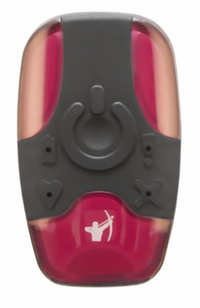
HRV measurement takes place on a typical working day. The recording is made over 24 hours using a small recorder that is attached to the upper body and scans the heart's activity. The ECG device is so small that it can be worn discreetly under clothing without restricting freedom of movement! Participants receive details about the measurement process and how to attach the device in advance.
The analysis discussion and support
The results of the analyses are discussed in detail in confidential discussions with a coach, and participants receive comprehensive documentation of the results with explanations, graphics, and personal recommendations suitable for everyday use.
A comprehensive understanding of the results helps participants develop and expand their own capacity for self-analysis and personal responsibility.
Based on this, goals and measures are formulated together with the coach and an implementation program is provided.
Benefits
- An objective analysis of your current physical and mental performance and recovery abilities
- Identification of personal stressors and stressful situations, as well as highlighting stress patterns
- Recognition of energy sources and performance reserves to achieve a state of flow
- Information on your current sleep architecture and specific recommendations for optimizing sleep quality
- Reflection on professionally relevant basic talents and corresponding areas of competence
- A personal development plan based on goals that can be implemented in everyday life to maintain and secure energy and well-being in the long term.
